
The Moisture Source
A specialist considers roof or plumbing leaks, condensation, drainage problems, appliance failures, and water intrusion around the building envelope. Stopping or correcting the source is necessary before repairs are closed.
Serving Miami, Florida & surrounding areas
Mon–Fri 8am–6pm · Sat 9am–2pm
Mold specialist services in Miami, Florida
Get a careful assessment, a written scope, and practical recommendations based on the moisture conditions inside your property.
Assessment before action
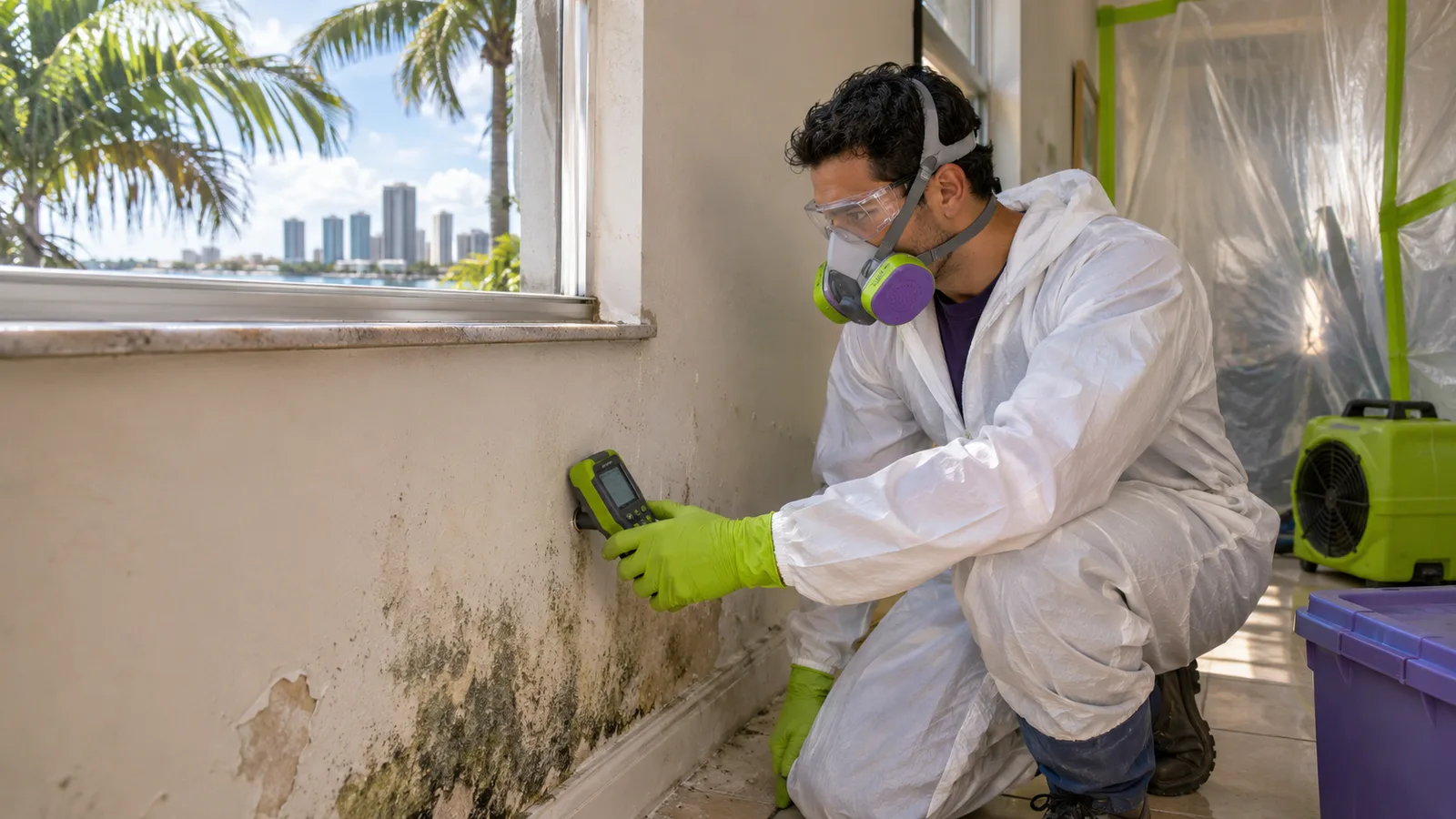
A Miami mold specialist should do more than point out visible growth. The work starts with understanding where moisture entered, how far the affected material extends, and what must be removed or cleaned. Mold Abatement Miami evaluates accessible areas, documents relevant conditions, and develops a practical scope based on the property rather than relying on a one-size-fits-all recommendation.
Miami's warm, humid climate can complicate moisture control. Air-conditioning systems run for long periods, condensation may form around cold surfaces, and wind-driven rain can expose weaknesses around windows, roofs, and exterior walls. Plumbing leaks, overflowing appliances, and past flooding create other possible sources. Because new growth can follow if damp conditions remain, moisture correction belongs in the plan from the start.
With controlled work practices, direct communication, and clear explanations of what happens next, we serve as a mold abatement company Miami homeowners rely on for useful findings and an organized path forward. Our team works with owners, property managers, tenants, and commercial decision-makers.
A building-focused evaluation
A specialist considers roof or plumbing leaks, condensation, drainage problems, appliance failures, and water intrusion around the building envelope. Stopping or correcting the source is necessary before repairs are closed.
Drywall, insulation, carpet padding, and some ceiling materials are porous and may require removal when contamination is established. Many hard, nonporous surfaces can be cleaned using appropriate methods.
Staining, musty odors, elevated moisture readings, warped finishes, and deterioration near baseboards can justify closer investigation. Destructive openings should be targeted, authorized, and limited to areas supported by evidence.
The plan should account for occupied rooms, children, pets, sensitive individuals, tenant coordination, work hours, and safe entry routes. These details affect containment and scheduling.
Growth near returns, air handlers, drain pans, or duct connections requires careful evaluation. An HVAC system should not be assumed contaminated merely because mold is present in another part of the building.
Photos, moisture observations, affected locations, recommended removals, and cleaning steps make the scope easier to review. Good documentation also helps contractors and property representatives coordinate responsibilities.
Property-specific investigation
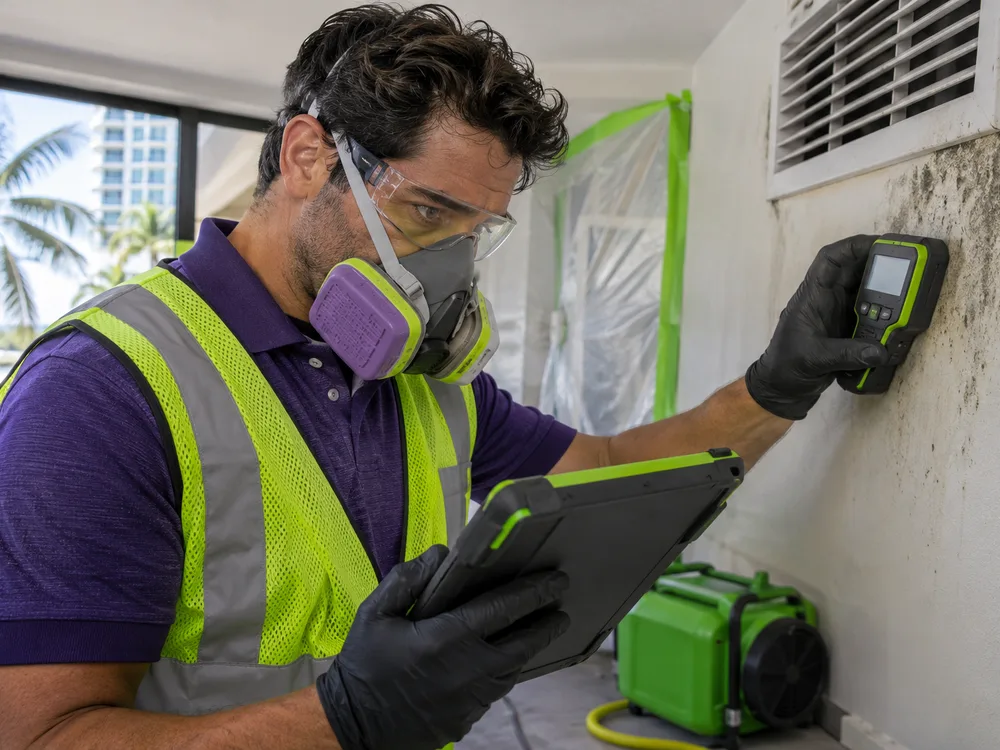
A visual inspection establishes the known conditions. Depending on access and the reason for the visit, the specialist may use a pin or pinless moisture meter, a hygrometer, and thermal imaging as a screening aid. Thermal images show temperature differences, not mold, so suspicious findings still need confirmation through direct examination and moisture measurements.
Sampling is not automatically needed. When visible growth and the affected material are already clear, samples may add little to the removal plan. Testing can be useful when the source is uncertain, documentation is required for a dispute or transaction, or an independent assessor needs data to define a protocol. Any laboratory results should be interpreted alongside the building history and current moisture conditions.
Local construction varies. Concrete and masonry surfaces are common throughout South Florida, while drywall partitions, furring systems, cabinets, and wood finishes can conceal damp cavities. In high-rise units around Brickell, access rules, elevators, shared walls, and building management approvals can shape the work plan. In Coral Gables and Coconut Grove, detached homes may require a broader check of roofs, windows, crawl spaces where present, and additions completed at different times. Miami Beach properties also demand close attention to salt-laden outdoor air and persistent coastal humidity when indoor moisture is being diagnosed.
Assessment through completion
A defined sequence protects occupied areas, keeps the scope organized, and establishes clear completion criteria.
Book Your Free InspectionThe specialist asks when the condition appeared, whether a leak or flood occurred, what repairs were attempted, and whether odors or staining change when the air conditioning runs.
Accessible surfaces and likely moisture pathways are checked. Findings are documented, and the scope identifies affected rooms, materials, containment needs, and any source correction that must happen first.
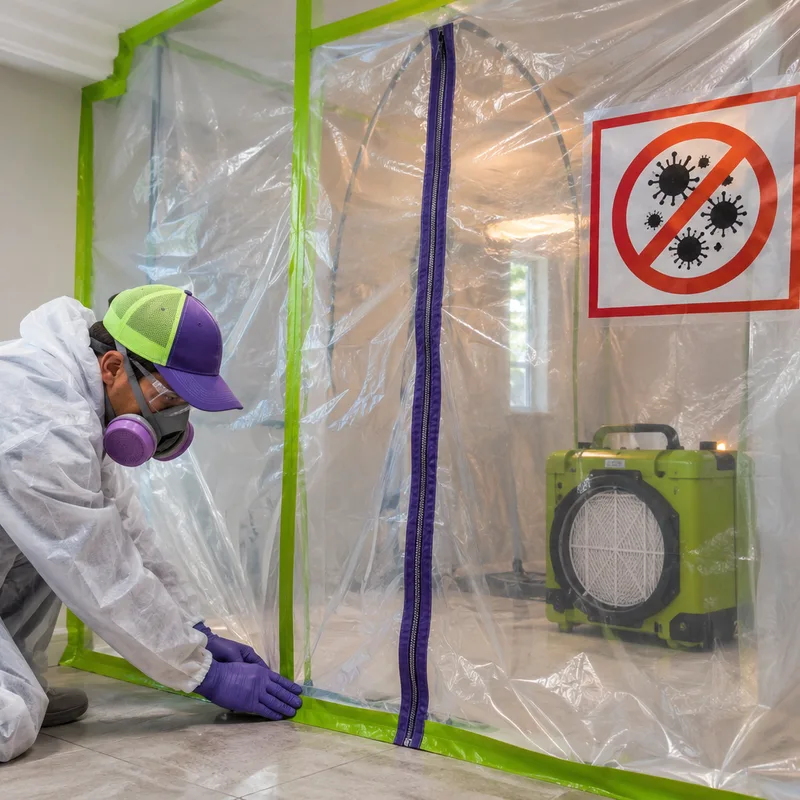
Workers protect adjacent finishes and establish containment where needed. Polyethylene sheeting, sealed openings, controlled entry, negative air pressure, and HEPA-filtered air devices may be used to limit the spread of dust and spores.
Unsalvageable porous material is removed using controlled methods and bagged before leaving containment. Salvageable surfaces are HEPA vacuumed and cleaned according to the material and condition. Simply painting over visible growth is not remediation.
The remaining structure must be dry before reconstruction. Detailed cleaning addresses settled debris within the contained work area, including ledges and other horizontal surfaces.
The work area is checked for visible dust, debris, remaining growth, and unresolved dampness. When the project requires independent post-remediation verification, that review should occur before walls or finishes are restored.
Controlled work practices
Good containment separates the work area from occupied space and gives workers a controlled route for removing debris. The setup depends on the location, amount of affected material, air movement, and whether demolition is required. A small isolated area does not need the same setup as contamination spanning multiple rooms.
Negative air pressure may be established with a HEPA-filtered air scrubber exhausting appropriately. Supply and return openings within containment are addressed so demolition dust does not circulate through the property. Workers may use disposable coveralls, gloves, eye protection, and respiratory protection selected for the task. Equipment alone is not the plan. Proper sequencing, careful material removal, and detailed cleaning determine whether containment does its job.
Florida regulates certain mold-related activities, and licensing requirements depend on the role and project. Customers should confirm that the professionals performing assessment or remediation hold any license required for their work through the Florida Department of Business and Professional Regulation. They should also ask who will define the scope, who will perform the work, and whether independent verification is appropriate.
Start by asking how the specialist will identify the water source and distinguish confirmed damage from suspected conditions. A credible proposal describes the affected locations, materials to be removed or cleaned, containment approach, equipment, debris handling, and completion criteria. Broad language such as “treat the whole property” is difficult to evaluate without supporting observations.
Ask whether the person inspecting the property is qualified for the role being performed and whether laboratory analysis, if proposed, will change a decision. Sampling should answer a specific question. It should not replace a building investigation or a moisture assessment.
Price comparisons are meaningful only when the scopes match. One estimate may include containment, removal, HEPA air filtration, detailed cleaning, and disposal, while another covers only surface treatment. Confirm whether leak repairs, reconstruction, contents cleaning, HVAC work, permits, or independent clearance are included. Obtain those distinctions in writing before authorizing work.
Availability also matters after sudden water damage. Wet materials should be addressed promptly, but urgency does not eliminate the need for a defined scope. A dependable mold specialist in Miami can explain immediate stabilization measures, what can wait for approval, and which areas should remain undisturbed.
Get a written assessment of the affected areas and a practical plan before demolition, cleaning, or reconstruction begins.
Book Your Free InspectionHomeowner questions
Cost depends on whether you need an inspection, sampling, a written protocol, or physical remediation. The affected square footage, material type, access, containment, occupied conditions, and amount of demolition all change the price. High-rise access in areas such as Brickell may add building coordination and restricted work hours. A written scope is needed before a reliable abatement price can be confirmed.
No, air testing is not automatically necessary when visible growth and the affected materials are already clear. Testing is more useful when the source or extent is uncertain, documentation is required, or an independent assessor needs data for a protocol. Results should be reviewed with moisture readings, inspection findings, and the property's water-damage history.
A limited, accessible work area may take a few working days, while multi-room projects can take longer. Containment setup, demolition, structural drying, detailed cleaning, building access, and independent verification affect the schedule. Reconstruction begins only after the source has been corrected and the remaining materials are acceptably dry.
Occupancy depends on the location and size of the work area, the ability to isolate it, and the needs of the occupants. A contained room may sometimes be separated from the rest of a residence, while broader work can disrupt bathrooms, kitchens, exits, or air-conditioning. The specialist should address access and occupancy in the written work plan before starting.
Drywall may remain when it is dry, structurally sound, and limited surface contamination can be cleaned appropriately, but established growth within the paper facing or gypsum often requires removal. The decision depends on moisture exposure, physical damage, and contamination depth. Painting or applying a coating over active growth does not correct the condition.
Avoid disturbing visible growth, removing damaged drywall, or placing fans directly on a suspect area. If it is safe, stop the water source and document the condition with photos. Keep children and pets away, note when odors or stains appeared, and gather records for prior leaks, plumbing repairs, roof work, or insurance claims.
Bleach is not a substitute for source correction, removal of damaged porous material, and physical cleaning. Its suitability varies by surface, and applying liquid to porous material can add moisture without addressing growth inside it. Professional work selects a method based on the material, extent, and occupancy conditions rather than relying on one chemical.
Independent post-remediation verification is appropriate when the project scope, contract, insurer, property transaction, or occupant concerns call for it. The review should occur after cleaning but before reconstruction closes the work area. Visual cleanliness, absence of unresolved moisture, and any specified sampling criteria should be evaluated against the written protocol.
Plan the right next step
Describe the affected area, any known water event, and what you have observed. Mold Abatement Miami will help determine the right next step for your property.