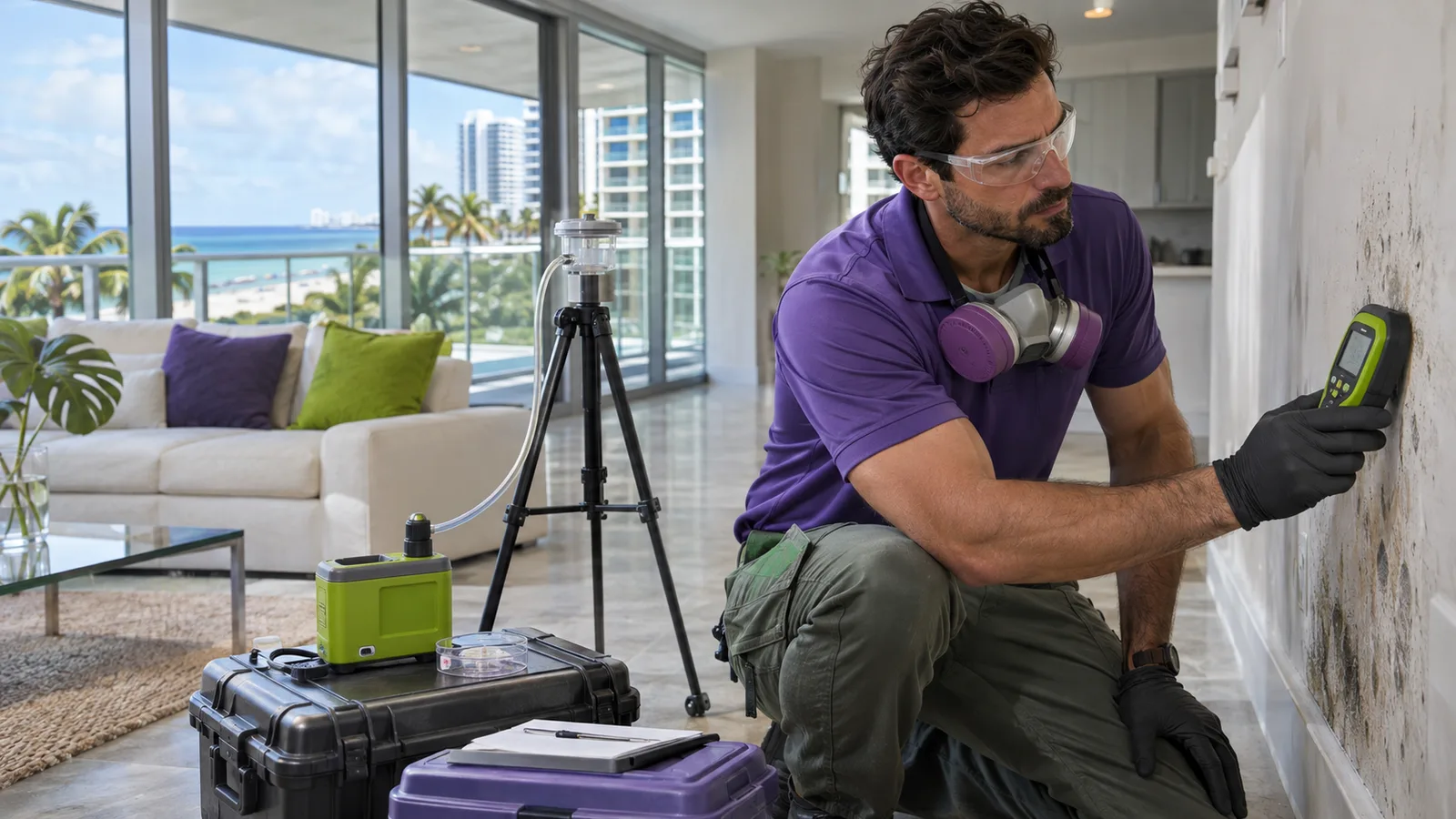
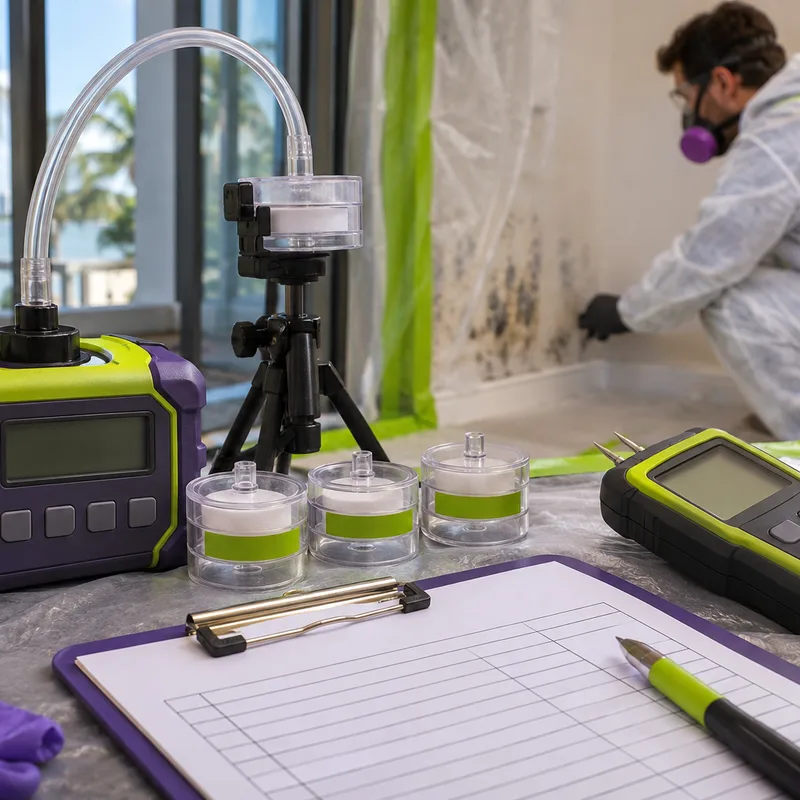
Miami Beach has warm, humid conditions, frequent rain, salt-laden coastal air, and many air-conditioned buildings. These factors do not prove a mold problem, but they make moisture control especially important. Condensation can develop where humid outdoor air meets cold surfaces, while wind-driven rain may enter around aging windows, doors, balconies, roofs, or exterior walls.
Building type also changes the inspection. South Beach includes older hotels, apartments, and Art Deco buildings where prior repairs can conceal water staining. Mid-Beach has large condominium and hotel properties with shared walls, mechanical systems, and common building components. North Beach combines multifamily buildings with smaller residential properties, so the source may involve either an individual unit or a shared assembly. In Sunset Harbour, mixed residential and commercial use can place different cooling schedules and humidity loads next to each other.
High-rise units require attention to air-conditioning closets, supply registers, exterior-facing walls, plumbing chases, and areas near windows. A lower-floor unit or detached home may also warrant checks around baseboards, cabinets, roof penetrations, and rooms affected by drainage or rain entry. If moisture may originate in a common element, the report can help an owner or manager communicate the observed location without claiming responsibility that the evidence cannot establish.