
A Musty Odor Without Visible Growth
An odor can point to damp material inside a wall, cabinet, ceiling cavity, or air-conditioning area. Inspection and targeted sampling can help narrow the concern.
Serving Miami, Florida & surrounding areas
Mon–Fri 8am–6pm · Sat 9am–2pm
Mold testing services in Miami, Florida
Get clear findings based on careful sampling, documented conditions, and laboratory analysis so you can make an informed decision about your property.
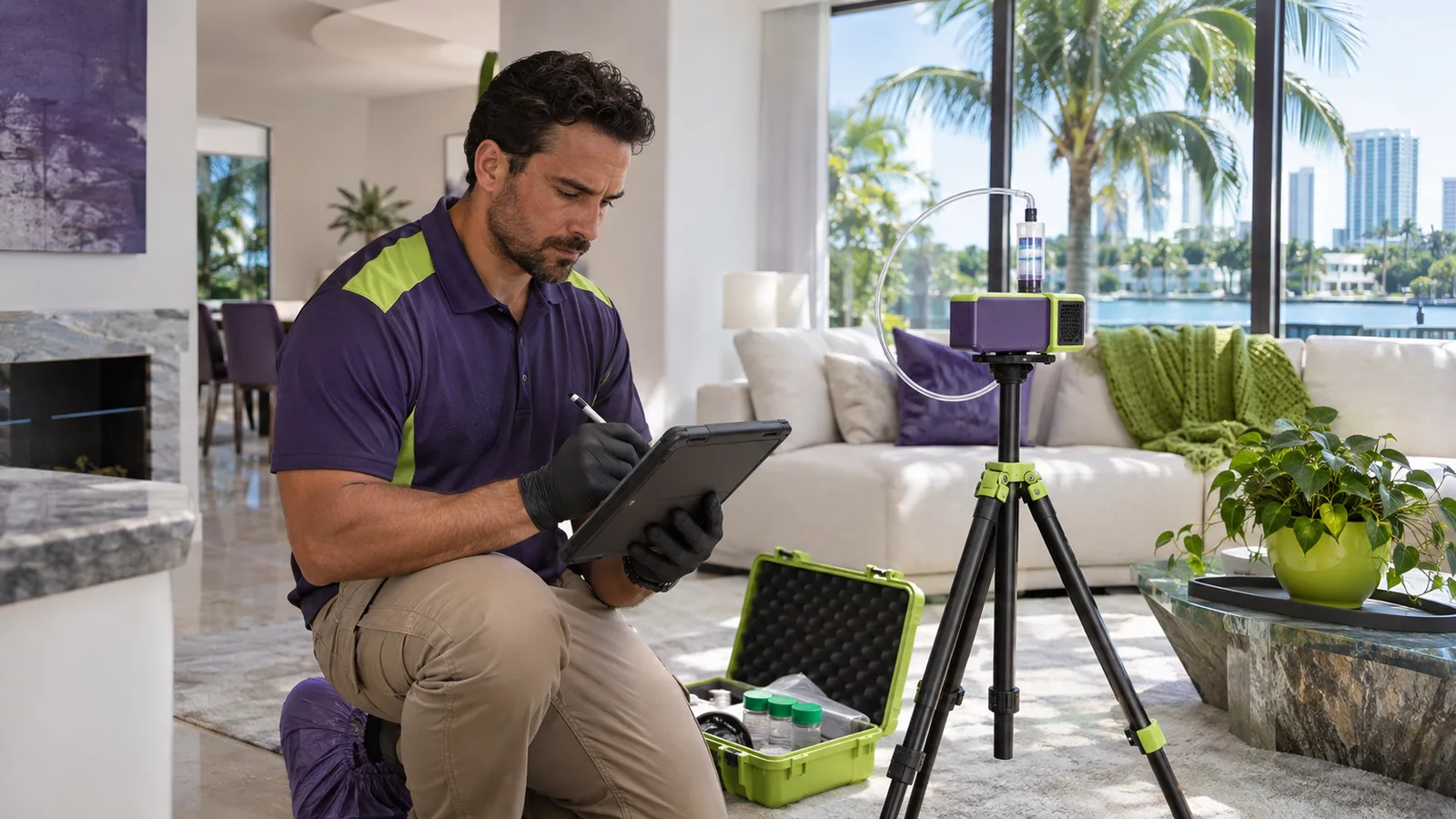
Evidence before assumptions
Miami mold testing helps determine whether suspected growth or airborne spores are present and provides evidence for deciding what to do next. Testing may be appropriate after a plumbing leak, roof intrusion, air-conditioning problem, persistent musty odor, or unexplained staining. It can also help when buying a property or checking conditions after water damage.
A sound assessment starts with the building, not a sample alone. We ask about the moisture history, inspect accessible areas, note visible conditions, and select sampling locations based on what we find. Throughout the process, an experienced mold abatement team in Miami, FL keeps the investigation focused on the property conditions that matter rather than collecting unnecessary samples.
Testing is especially useful when the source is hidden, the extent is uncertain, or written laboratory results are needed. It does not replace moisture correction. A positive result is most useful when it is interpreted alongside humidity, material condition, ventilation, and the likely path by which water or humid air entered the space.
Assessment and sampling details
The right sampling plan depends on the concern. Air samples can compare indoor spore types and concentrations with an outdoor control collected during the same visit. Surface samples, often collected with a swab or tape lift, can help identify growth on a specific material. Samples are submitted to a laboratory for analysis, and the resulting report identifies the fungal categories observed.
Visual observations and moisture measurements add context. A moisture meter may identify damp drywall, wood, or other building materials. Infrared imaging can help locate temperature patterns that warrant closer inspection, but it does not detect mold by itself. Relative humidity readings also help explain whether indoor conditions may support continued moisture problems.
Sampling locations should follow evidence, not convenience. A room with staining near an air-conditioning register may call for a different approach than a bathroom with repeated condensation or a wall affected by a supply-line leak. The goal is a defensible set of findings that relates laboratory data to actual conditions in the building.
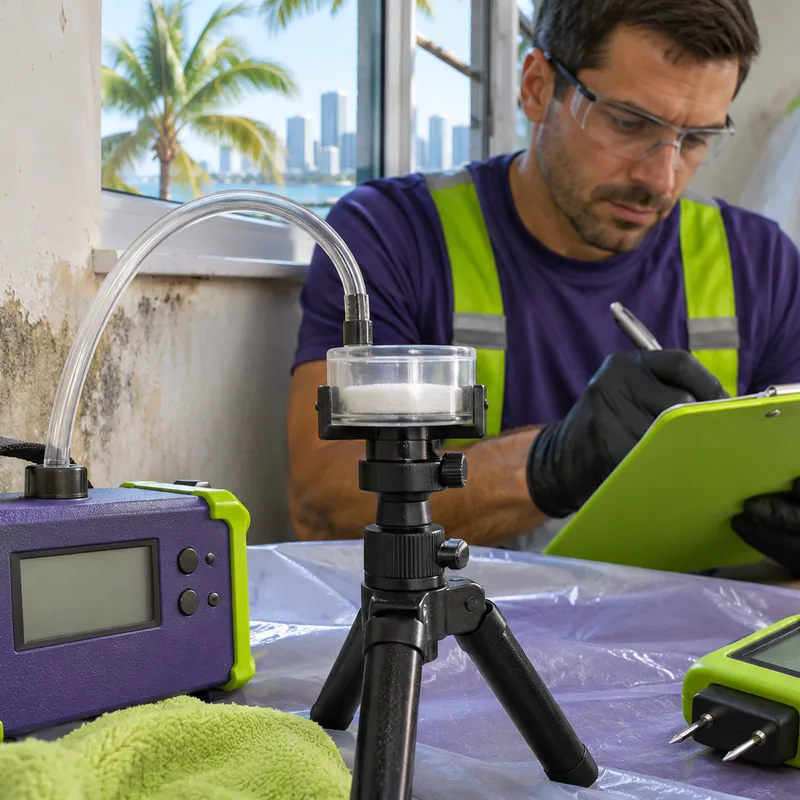
Reasons to test
An odor can point to damp material inside a wall, cabinet, ceiling cavity, or air-conditioning area. Inspection and targeted sampling can help narrow the concern.
Testing may help when materials stayed wet, the drying history is unclear, or staining returned after a plumbing or roof leak.
Buyers, sellers, landlords, and commercial occupants may need documented findings before a purchase, lease decision, repair, or insurance discussion.
Post-work verification can assess cleaned areas after the moisture source has been corrected and the work area is ready for evaluation.
Miami's warm, humid climate can make condensation and air-conditioning performance relevant to an investigation, particularly where indoor humidity remains elevated.
Surface sampling can help distinguish suspected fungal growth from soot, dirt, or other staining when visual inspection alone is inconclusive.
From concern to clear findings
Each step connects the property's moisture history and visible conditions with a purposeful sampling plan.
Book Your Free InspectionWe review odors, staining, leaks, past flooding, air-conditioning issues, health-related concerns, and any repairs already completed. This history guides the inspection.
The assessment covers relevant rooms and building materials. We document visible conditions and use moisture or humidity readings where they can clarify the source.
We select air or surface samples based on observed evidence. When indoor air is sampled, an outdoor control is commonly collected for comparison with ambient conditions.
Each sample is labeled and documented before laboratory submission. Analysis identifies the types of fungal material found and reports the results for each location.
We connect the laboratory data with the inspection observations, discuss moisture-related priorities, and outline practical next steps based on the documented conditions.
South Florida property context
Miami's heat, humidity, heavy rain, and frequent use of air conditioning affect how moisture moves through a building. Condensation can form when warm, humid air reaches cool surfaces. Poorly controlled indoor humidity can also affect closets, exterior-facing walls, and areas with limited airflow. Testing should account for weather, ventilation, and whether the air-conditioning system was operating normally before sampling.
Property type matters too. In Brickell and Downtown Miami, condominium testing may involve mechanical closets, fan-coil units, shared walls, and building-management access rules. Coral Gables has many masonry and stucco homes where roof, window, plumbing, and air-conditioning histories can help direct an investigation. Little Havana includes older housing stock in which past repairs or concealed leaks may complicate moisture tracing. In Coconut Grove, dense vegetation and wind-driven rain exposure can make exterior openings and roof details relevant after storms.
These conditions do not prove mold is present. They help determine where to inspect, which measurements are useful, and whether a sample will answer the property owner's question.
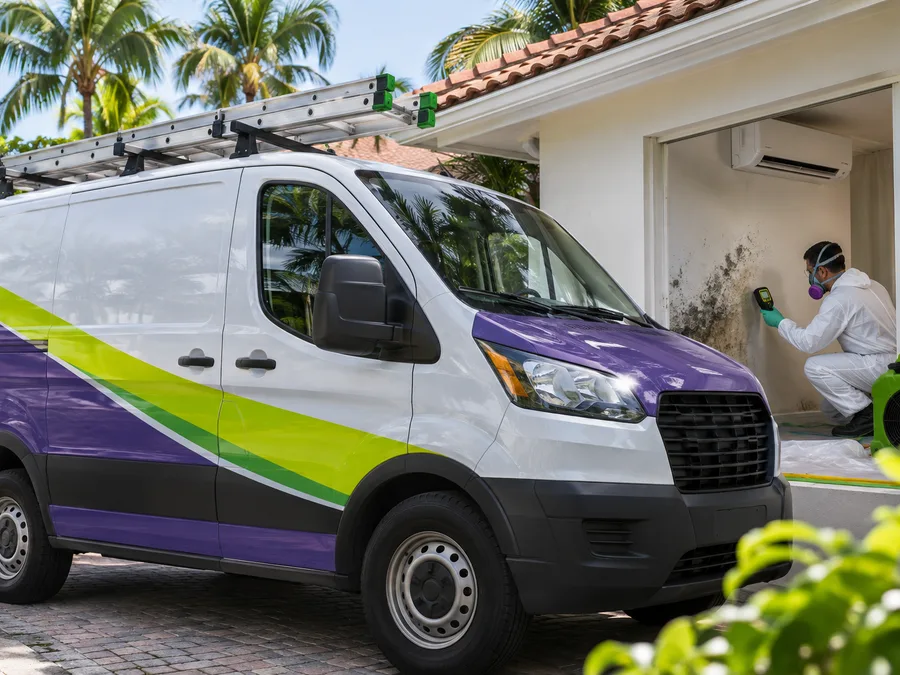
Testing pricing
Professional mold testing in Miami typically costs about $300 to $700 for a focused residential assessment with a limited number of samples. Larger homes, commercial properties, extensive moisture concerns, or additional laboratory samples may cost more. Final pricing depends on property size, the number and type of samples, accessibility, suspected problem areas, report requirements, and whether post-work verification is needed. The exact cost and proposed sampling scope are confirmed before the testing visit.
Understanding the report
A laboratory report should identify what was found in each submitted sample. Air results commonly list fungal spore categories and measured concentrations, while surface results identify fungal structures observed on the material collected. The numbers need context. There is no single universal indoor spore-count threshold that determines whether every building passes or fails.
Interpretation compares indoor findings with the outdoor control, considers whether particular spore types are amplified indoors, and weighs those results against visible growth, moisture readings, odors, and building history. A report should also distinguish observed facts from recommendations. Testing cannot determine the exact age of growth, prove the source of every symptom, or guarantee that an unsampled cavity is clear.
Before testing, close windows and exterior doors under normal operating conditions when practical, and avoid cleaning or disturbing the suspected area. Do not aim fans at visible material. Share recent leak repairs, drying records, prior reports, and locations where odors are strongest. These details help produce a more useful mold test in Miami.
If an odor, leak, or suspicious stain is raising questions, arrange testing before disturbing the area so the findings reflect current conditions.
Book Your Free InspectionHomeowner questions
Laboratory results are often available within a few business days after sampling, although timing depends on the laboratory and analysis requested. Expedited processing may be available. The expected turnaround should be confirmed before samples are collected, especially when a Miami real estate or repair deadline is involved.
Testing may be unnecessary when visible growth and its moisture source are clear, but it can be useful when the extent is disputed, documentation is required, or the material is uncertain. In Florida, the appropriate scope can also depend on the size and circumstances of the affected area, so the inspection should determine whether sampling adds useful information.
The number of samples depends on the building layout, affected areas, inspection findings, and purpose of the test. A focused concern may need an outdoor control and a small number of indoor or surface samples, while a multistory home or commercial space may require broader coverage. More samples are not automatically better; each one should answer a specific question.
The property should generally remain under normal occupied conditions unless the tester gives different instructions. In Miami, shutting down or changing air-conditioning operation shortly before sampling can alter humidity and airborne conditions. Report unusual settings, recent filter changes, open windows, air cleaners, or dehumidifier use before the appointment.
A mold test can support an investigation of concealed growth, but a routine air sample cannot pinpoint an exact hidden location. Moisture readings, inspection evidence, odors, infrared temperature patterns, and targeted cavity sampling may help narrow the source. Infrared imaging shows temperature differences, not mold.
Yes. Post-remediation verification evaluates whether the corrected area is dry, visibly clean, and suitable for any agreed sampling after work is complete. The work area should be ready for evaluation before containment is removed or finishes are replaced, according to the testing plan.
Mold testing documents environmental conditions but does not diagnose a medical condition or prove the cause of an individual's symptoms. A qualified healthcare professional should address health questions. The property assessment can provide laboratory findings and moisture information that may be useful during that discussion.
Plan the right test
Tell Mold Abatement Miami what you have noticed, where it is occurring, and whether there has been a recent leak or humidity problem. We will help define a sensible testing scope for your property.