
Visible Growth
Discoloration, spotting, or fuzzy growth on drywall, wood, ceilings, cabinets, or trim warrants a closer look, especially when the affected area is expanding.
Serving Miami, Florida & surrounding areas
Mon–Fri 8am–6pm · Sat 9am–2pm
Mold removal services in Miami, Florida
Professional containment, removal, and careful cleanup for affected homes and commercial properties.
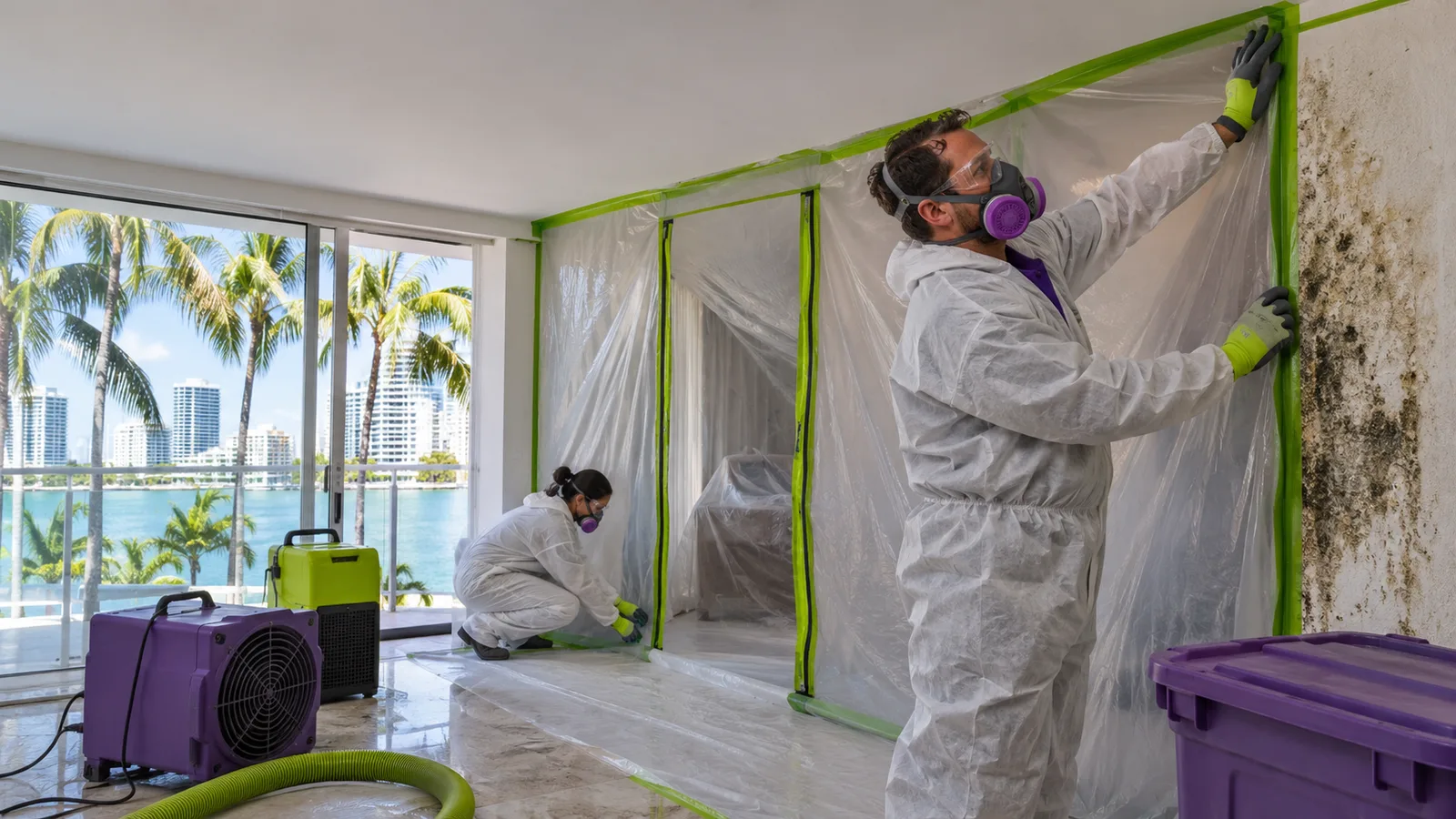
Scope before removal
Mold removal in Miami requires more than wiping visible growth from a wall. Indoor humidity, air-conditioning systems, roof or plumbing leaks, and storm-driven water can leave moisture inside drywall, cabinets, insulation, and other porous materials. If the damp material remains, the problem can return.
Mold Abatement Miami begins by identifying the affected materials and conditions that may be feeding the growth. Our team of Miami's mold abatement specialists plans the work around containment, controlled material removal, air management, and detailed cleaning. The goal is to remove contaminated material without spreading dust and spores into unaffected rooms.
Every job needs a scope based on what is actually present. A localized area beneath a sink is different from growth across several rooms after a prolonged leak. We explain which materials can be cleaned, which may need removal, how the work area will be isolated, and what must happen before repairs begin.
Conditions that need attention
Discoloration, spotting, or fuzzy growth on drywall, wood, ceilings, cabinets, or trim warrants a closer look, especially when the affected area is expanding.
A recurring musty smell can point to damp material behind finishes, inside cabinets, or near an air-conditioning component, even when growth is not plainly visible.
Leaks, overflowing fixtures, roof intrusion, and storm-related water can wet porous building materials. Fast drying and a proper assessment help limit the affected scope.
Condensation, high indoor humidity, or a leak that was repaired late can allow mold to return unless the moisture source and contaminated materials are addressed.
Removal may be needed before reconstruction, occupancy, or a property transaction can move forward. A written scope helps contractors and property owners coordinate the work.
Growth behind drywall, under flooring, around cabinetry, or across multiple rooms calls for controlled access and containment rather than ordinary household cleaning.
Containment and air control
Containment separates the work zone from occupied or unaffected areas. Depending on the scope, technicians may use polyethylene sheeting, sealed openings, controlled entry points, and negative air machines fitted with HEPA filtration. Supply and return vents in the work zone may also need protection so demolition dust does not move through the HVAC system.
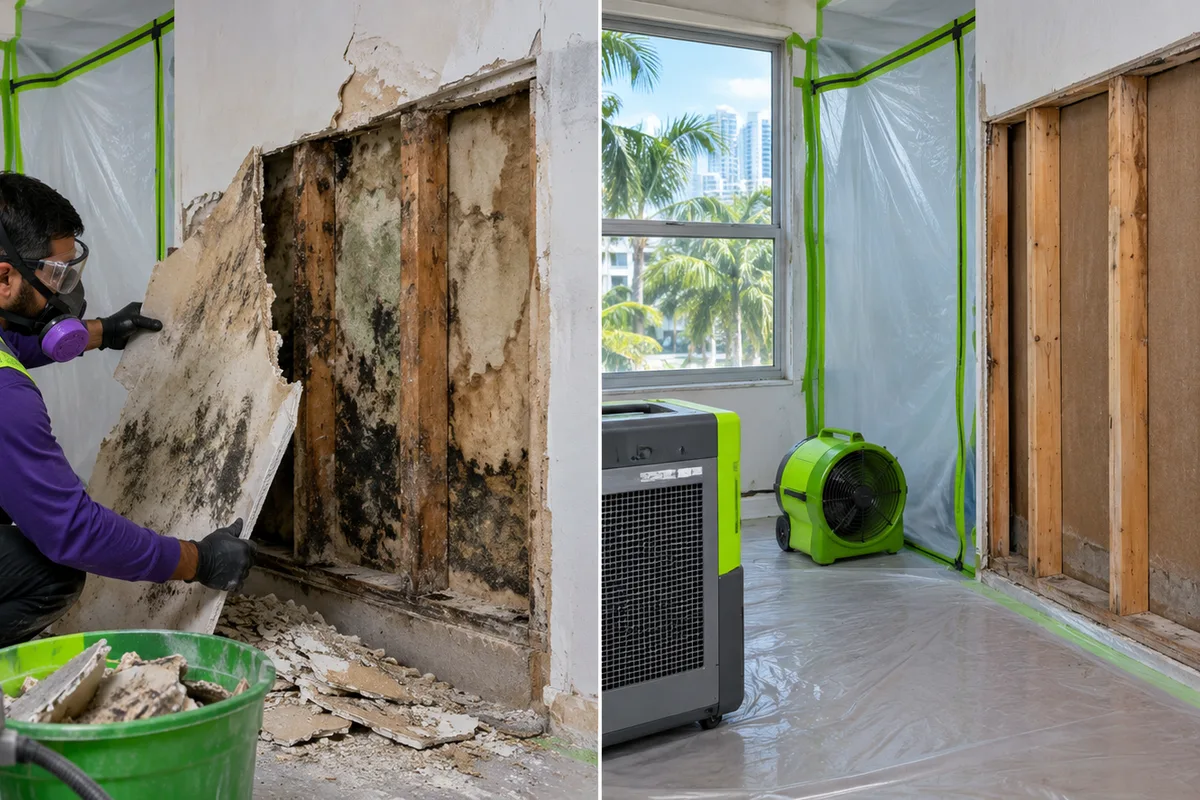
Inside the contained area, workers use appropriate personal protective equipment and remove unsalvageable porous materials in a controlled manner. Drywall, insulation, carpet pad, and some composite wood products often cannot be restored after extensive contamination. Sound framing and other suitable surfaces may be HEPA vacuumed, cleaned with methods appropriate to the material, and dried.
In Miami's warm, humid climate, drying is part of the removal plan rather than an afterthought. Dehumidification and moisture measurements help determine whether exposed materials are ready for cleaning, verification, or reconstruction. Applying paint or sealant over active growth is not a substitute for removing contamination and correcting moisture.
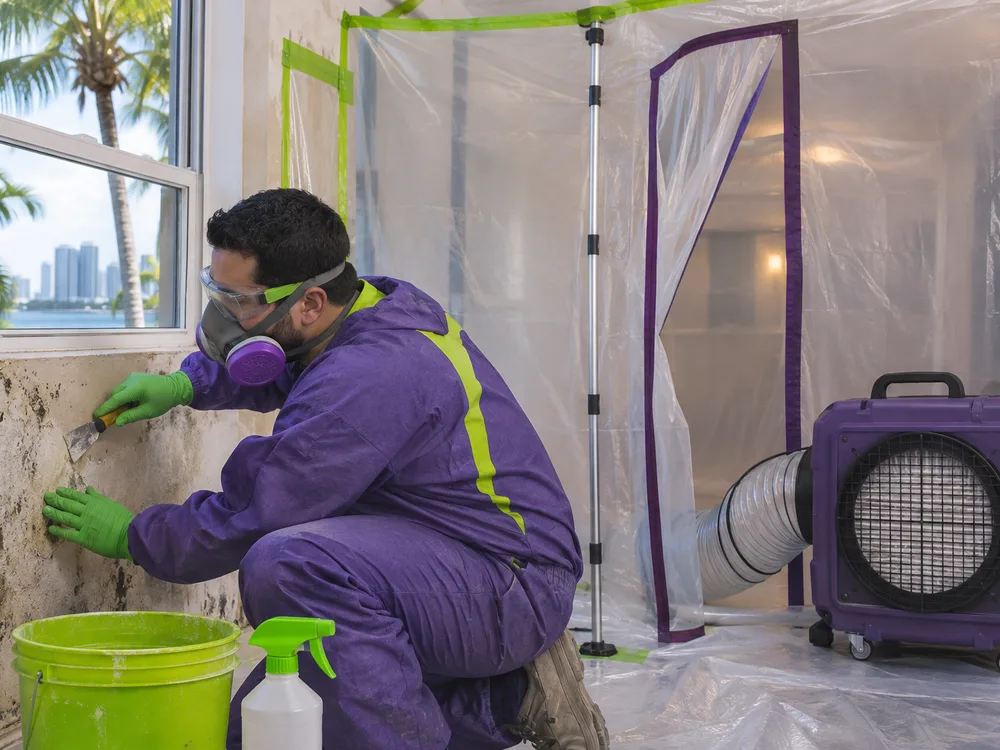
From assessment to review
Each phase controls the work area, removes affected material, and prepares the property for appropriate verification or reconstruction.
Book Your Free InspectionWe review visible growth, water history, affected materials, access, and nearby occupied areas. Moisture readings can help locate damp building materials and define the likely work zone.
Contents are moved or protected as the scope requires. The crew establishes containment and plans safe movement of tools, debris, and workers through the property.
Negative pressure and HEPA-filtered air equipment may be used to reduce migration from the contained area. Openings and HVAC pathways are managed according to the job conditions.
Contaminated materials that cannot be salvaged are removed and bagged for controlled transport. Remaining suitable surfaces are HEPA vacuumed and cleaned using material-appropriate methods.
Exposed materials are dried, the contained area is checked, and the completed work is reviewed against the agreed scope. When independent post-remediation verification is required, it should be performed before containment is removed or reconstruction starts.
South Florida property context
Miami properties face long periods of heat and humidity, frequent heavy rain, and seasonal tropical weather. Those conditions can slow drying and make small building-envelope or air-conditioning problems more consequential. Indoor moisture control often depends on both repairing the water source and operating the cooling and dehumidification equipment correctly.
Housing and property layouts also affect access. In Coral Gables, work in older homes may involve plaster, masonry walls, built-in cabinetry, or additions completed at different times. Coconut Grove properties can have dense landscaping around exterior walls and roofs, so drainage, flashing, and hidden water entry deserve attention. Brickell condominiums require planning around elevators, shared corridors, building management rules, and adjacent units. In Little Havana, attached or closely spaced buildings can require careful protection of occupied rooms and neighboring spaces. Miami Beach properties face salt air and wind-driven rain, which can complicate exterior leak investigation and material drying.
These details do not prove that mold is present. They affect how a crew investigates moisture, sets containment, moves debris, and protects the rest of the property.
Material handling and completion
Effective mold removal Miami property owners can rely on starts with a distinction between materials that can be cleaned and materials that have lost their practical serviceability. Nonporous surfaces are generally more suitable for cleaning. Porous materials with extensive growth or deterioration may need to be removed because contamination can extend beneath the surface.
Reconstruction is a separate stage. New drywall, flooring, insulation, cabinets, or paint should not conceal unresolved moisture or remaining contamination. If testing or a written protocol has been prepared by an independent assessor, the removal scope should follow that document. Clearance sampling, when requested or required for the project, should be completed by an independent qualified party rather than treated as a visual check alone.
Before work begins, ask for a scope that identifies containment, removal areas, cleaning methods, air-control equipment, and the conditions for completion. That makes it easier to compare proposals based on the actual work rather than price alone.
Removal pricing
Mold removal in Miami typically ranges from $500 to $6,000 for localized or moderate projects, while extensive contamination across several rooms can exceed $10,000. Small contained areas usually fall near the lower end; hidden growth, widespread demolition, and difficult access raise the price.
Final cost depends on affected square footage, material type, containment needs, HEPA equipment, debris handling, moisture conditions, and whether independent assessment or clearance testing is needed. Condominium access rules can also add labor and scheduling requirements. The exact cost is confirmed after an on-site assessment and written scope.
Address visible growth and persistent moisture before affected materials deteriorate further. A clear scope gives you the containment plan, removal limits, and next steps before work starts.
Book Your Free InspectionHomeowner questions
A localized mold removal project may take one to three working days, while larger or hidden conditions can require several days or longer. Drying time, demolition, condominium work-hour rules, and independent verification can extend the schedule. The moisture source should be corrected before reconstruction closes the area.
Whether you need to leave depends on the size and location of the containment, the occupants, and whether essential rooms remain safely accessible. A small isolated work zone may allow normal use of other rooms. Multiroom work, extensive demolition, or projects affecting HVAC operation may make temporary relocation the practical choice.
Drywall can sometimes remain when growth is limited to a cleanable surface and the material is dry and sound, but contaminated or deteriorated drywall often requires removal. Because gypsum board and its paper facing are porous, the decision depends on the extent of growth, water exposure, and whether contamination extends into the wall cavity.
Testing is not necessary for every visible, localized condition, but it may be appropriate when the source is uncertain, growth is hidden, occupants have specific concerns, or documentation is needed. Florida regulates mold assessment and remediation activities, with limited statutory exemptions, so larger projects should be evaluated for applicable licensing and assessment requirements.
Household bleach is not a complete remedy for mold in porous building materials. It may change surface appearance without removing contamination within drywall, wood products, insulation, or carpet backing. Physical removal, HEPA cleaning, controlled disposal, and moisture correction are the main parts of a professional scope.
Avoid disturbing the affected area, running fans across it, or removing contaminated materials through occupied rooms. Keep people and pets away, document known leaks, and provide access to the work zone and relevant HVAC equipment. In a Brickell or Miami Beach condominium, confirm elevator protection, parking, insurance-document, and contractor-access rules with building management.
Plan the right scope
Tell Mold Abatement Miami what you have noticed and where the moisture occurred. We will discuss the conditions, assess the affected area, and outline the containment and removal work appropriate for the property.