
After a Leak or Water Event
An inspection can assess materials around a roof leak, plumbing failure, overflowing fixture, or air-conditioning drain issue, especially when drying was delayed or the affected area is unclear.
Serving Miami, Florida & surrounding areas
Mon–Fri 8am–6pm · Sat 9am–2pm
Mold inspection services in Miami, Florida
Find hidden moisture, document visible conditions, and get practical guidance based on what the inspector finds.
Evidence before assumptions
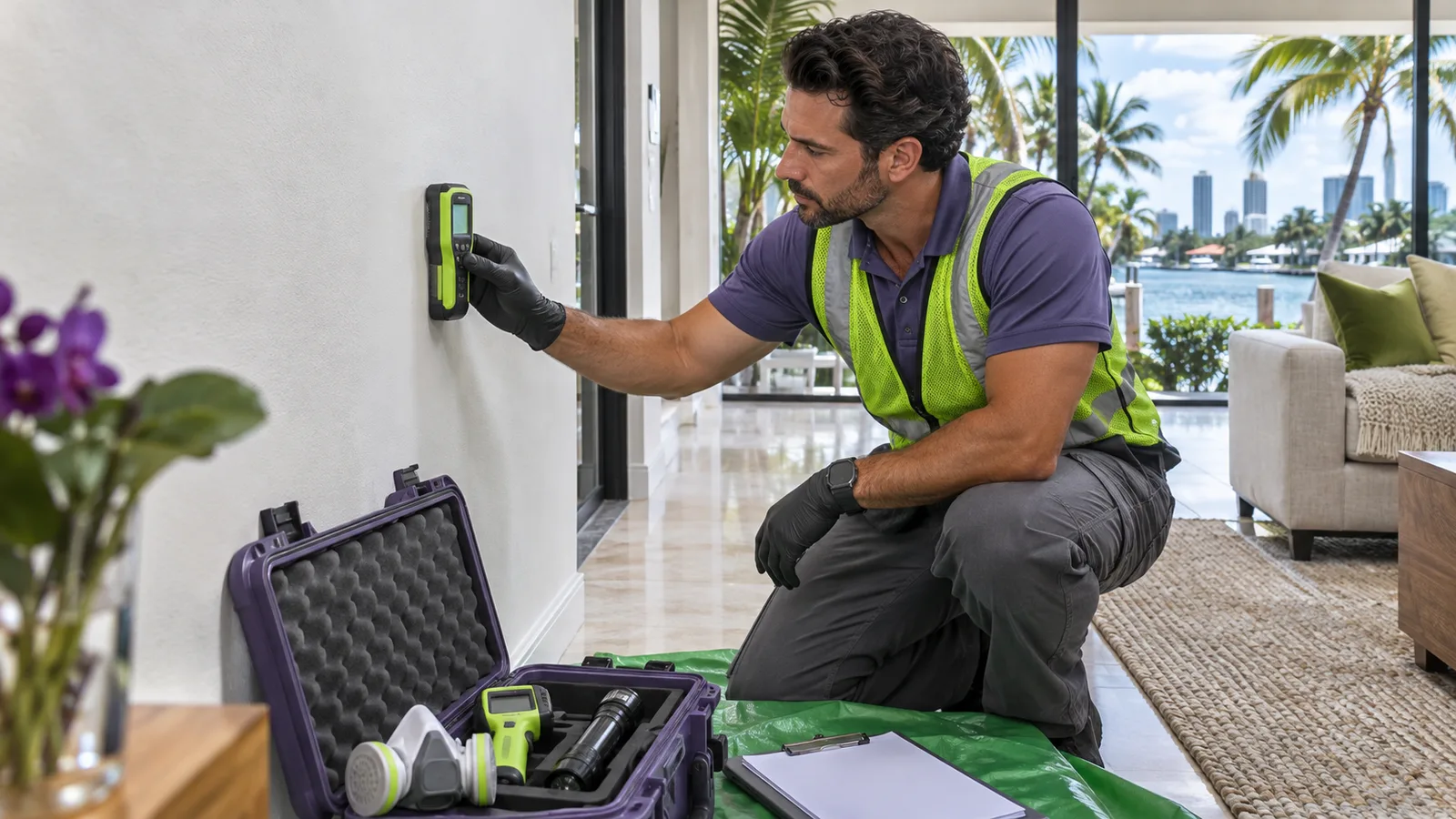
A mold inspection in Miami, FL helps determine whether suspicious staining, odors, or indoor moisture point to an active problem. The inspection focuses on evidence: visible conditions, moisture readings, building history, and the locations where water can enter or collect. That may include areas near air-conditioning equipment, plumbing fixtures, windows, exterior walls, and rooms affected by a past leak.
Mold Abatement Miami approaches each property as a building investigation rather than a quick visual check. As Miami's trusted mold abatement team, we document what is accessible, explain what the findings mean, and identify reasonable next steps without overstating the evidence. The goal is a useful record that helps an owner, buyer, tenant, property manager, or real estate professional make an informed decision.
Miami's warm, humid climate increases the need to evaluate moisture control alongside visible growth. Air conditioning can create condensation when ducts, drain lines, insulation, or equipment are not working as intended. Wind-driven rain can also reveal weak points around windows, doors, roofs, and exterior walls. An inspection connects these building conditions to the affected materials instead of treating every stain as the same problem.
Assessment and moisture mapping
A professional mold inspector in Miami starts with the reason for the visit. A musty odor after a plumbing leak calls for a different inspection path than discoloration around an air-conditioning register or concerns raised during a property purchase. The inspector reviews known water events and then examines accessible areas for staining, deterioration, condensation, and microbial growth.
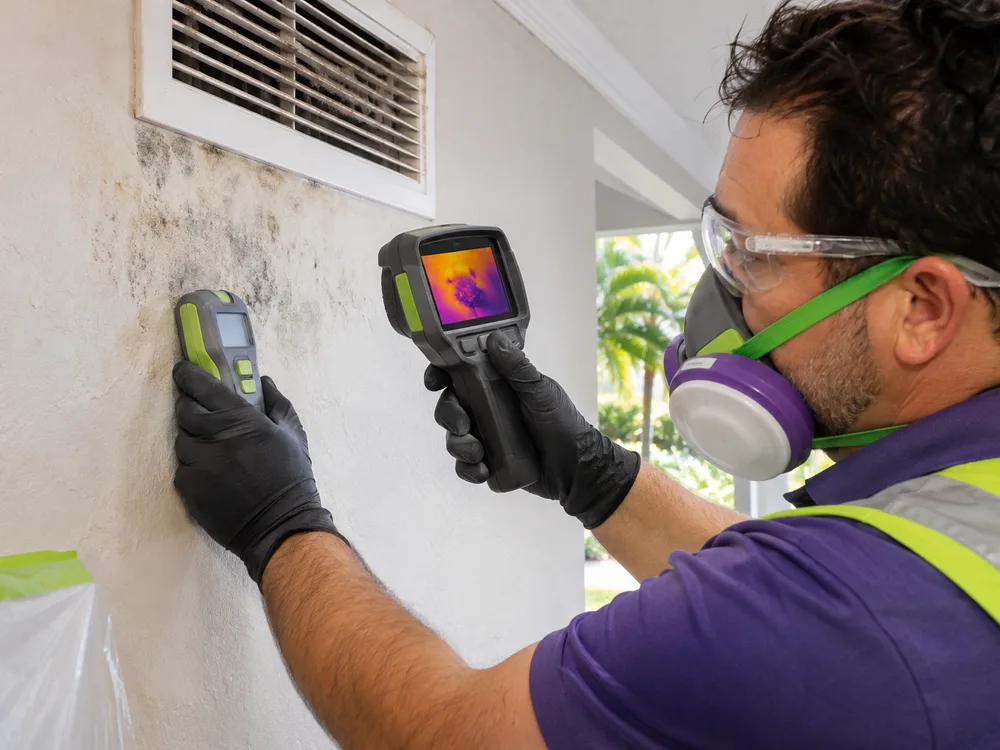
Moisture mapping is a central part of the work. A pinless meter can scan surfaces for relative differences, while a pin meter may be used when conditions require a more direct reading. Infrared imaging can help locate temperature patterns associated with moisture, but a thermal image does not prove that mold is present. Suspicious areas need to be checked with appropriate instruments and visual evidence.
The inspection may cover walls, ceilings, baseboards, cabinets, closets, bathrooms, air-conditioning closets, and accessible attic or crawl areas when they exist and can be entered safely. Condominium inspections also consider whether moisture may be related to an adjacent unit, a shared wall, or a common building component. These observations help define the affected area and the likely source that needs correction.
Reasons to investigate
An inspection can assess materials around a roof leak, plumbing failure, overflowing fixture, or air-conditioning drain issue, especially when drying was delayed or the affected area is unclear.
A targeted inspection can document current conditions when a general home inspection identifies staining, elevated moisture, or a persistent odor that needs closer review.
Musty odors may come from damp drywall, cabinetry, carpet backing, an air-conditioning closet, or another concealed area. The inspection follows moisture clues rather than relying on odor alone.
Recurring moisture on vents, windows, walls, or ceilings may indicate an insulation, humidity, temperature, or equipment problem that needs to be identified before damaged materials are addressed.
Repeated growth often means the moisture source remains active. Inspection findings can separate a surface-cleaning issue from a condition involving wet or porous building materials.
Written observations and photographs provide a dated account of accessible conditions for owners, tenants, managers, and other parties involved in a property decision.
From concern to clear findings
Each step narrows the investigation and connects observed conditions with practical recommendations.
Book Your Free InspectionWe ask about odors, visible changes, leaks, repairs, air-conditioning issues, and the timing of symptoms or property events. This history helps direct the inspection.
The inspector examines relevant rooms and building materials for discoloration, moisture damage, condensation, deterioration, and visible microbial growth.
Moisture meters and other appropriate tools are used to compare suspect materials with unaffected areas. Thermal imaging may support the investigation, but it is verified with direct observations or readings.
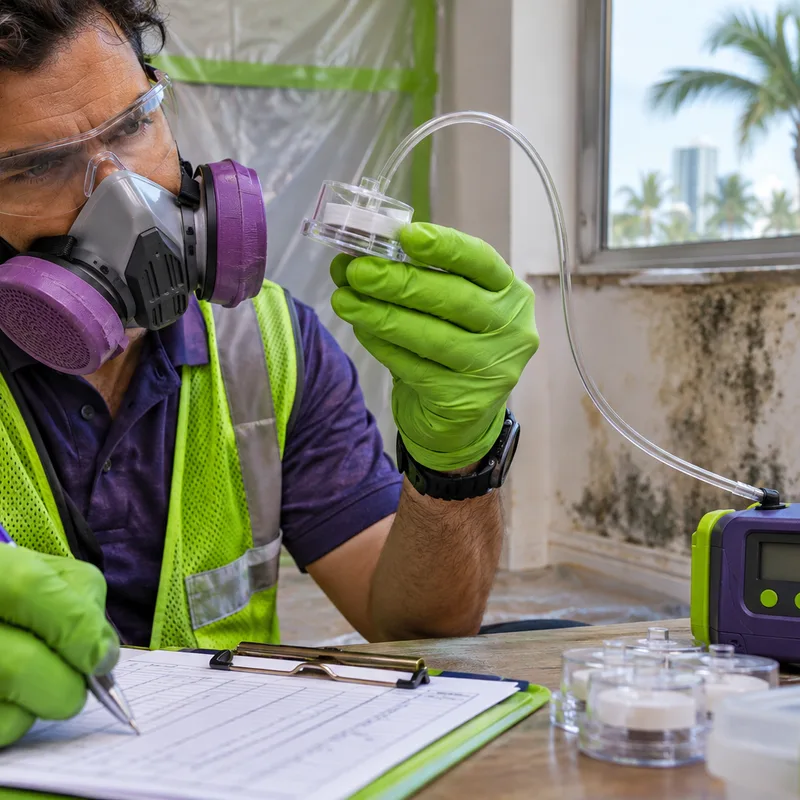
Air or surface samples may be recommended when they can answer a specific question. Samples are labeled and submitted to a qualified laboratory under a documented chain of custody.
You receive a clear account of observed conditions, moisture concerns, sample results when testing was performed, and practical recommendations for correcting the source and addressing affected materials.
Purposeful sampling
Testing is not automatically required for every mold inspection. If visible growth and its moisture source are already clear, sampling may add little to the decision. Testing is more useful when the suspected growth is concealed, parties need laboratory documentation, or an inspection must compare conditions in different areas.
Air sampling captures airborne particles over a defined period. Surface sampling, such as a swab or tape lift, can help characterize material on a specific location. A laboratory may report mold types and relative quantities, but the result must be interpreted with the building conditions. There is no single federal pass-or-fail concentration that applies to every indoor space.
Sampling quality depends on a defined purpose, suitable collection locations, and documented handling. An outdoor comparison sample may be appropriate for some air-sampling plans because outdoor spores influence indoor results. Weather, open windows, cleaning, air filtration, and air-conditioning operation can also affect a short sampling event. A responsible inspector considers those factors before drawing conclusions.
Miami property context
Mold inspection in Miami requires close attention to humidity, cooling systems, and rain exposure. In Brickell and Downtown Miami, many inspections take place in high-rise condominiums where limited access and shared building components can affect the investigation. Moisture may originate within the unit, at an exterior opening, or beyond the boundaries of the residence, so documentation matters.
Coconut Grove includes homes with varied ages, additions, and renovation histories. Coral Way has older houses, multifamily buildings, and updated interiors. In Little Havana, attached or closely spaced structures can require careful attention to plumbing walls, roof transitions, and accessible inspection limits.
Florida regulates mold assessors and mold remediators through the Department of Business and Professional Regulation. For projects within the law's scope, assessment and remediation are treated as separate regulated functions, subject to statutory exceptions.
A sound report distinguishes observed facts from possible causes. It should identify inaccessible areas, record instrument readings in context, and avoid claims that cannot be supported by the inspection. If destructive investigation is needed to open a wall or remove a finish, that work should be discussed and authorized rather than assumed.
Inspection pricing
A mold inspection in Miami typically costs about $300 to $700 for a standard residence, while larger properties, complex investigations, and laboratory sampling can raise the total. A limited assessment of one concern may cost less than a whole-property inspection.
Final pricing depends on property size, the number of suspect areas, access, inspection depth, and the type and quantity of samples. Condominium coordination, attic access, and expedited laboratory analysis may also affect the price. The exact cost is confirmed before the inspection begins.
If you have found staining, noticed a musty odor, or experienced a leak, arrange an inspection before painting over the area or replacing materials. Early documentation can clarify the source and the appropriate scope.
Book Your Free InspectionHomeowner questions
A standard residential mold inspection often takes about one to three hours, depending on property size, access, and the number of concerns. A condominium with one suspect wall may require less time than a house with an attic, several prior leaks, and multiple moisture patterns. Laboratory results require additional time when samples are collected.
Testing may not be necessary when visible growth and the moisture source are clear. Sampling is more useful when identification or documentation will change the decision, such as a dispute, a concealed source, or an assessment with a defined testing objective. The inspector should explain what question each proposed sample will answer.
An inspector can identify evidence that supports further investigation, but no noninvasive tool can confirm every concealed condition. Moisture readings, thermal patterns, odors, staining, and building history may indicate a problem behind drywall or cabinetry. Confirming it may require an authorized opening or another targeted method.
Keep suspect areas accessible and avoid cleaning, painting, or applying antimicrobial products immediately before the visit. If air sampling is planned, follow the inspector's instructions regarding windows, air-conditioning, filtration devices, and fans because those conditions can affect results. Gather records of leaks, plumbing repairs, roof work, and drying when available.
Yes, accessible conditions inside the unit can be inspected and documented even when the suspected source may involve a neighboring residence or common building component. Brickell and Downtown high-rises often require coordination with building management for mechanical rooms, exterior systems, or shared walls. The report should clearly state what was and was not accessible.
Verify the license required for the work, ask what the inspection includes, and confirm how sampling decisions and laboratory results will be explained. Florida regulates mold assessors through the Department of Business and Professional Regulation. A written scope should identify accessible areas, tools, sample charges, reporting, and limitations before the appointment.
The inspection can identify likely moisture sources when the evidence supports a conclusion, but some causes require additional trade work or destructive investigation. Common sources include plumbing leaks, rain entry, condensation, and air-conditioning drainage problems. The report should separate confirmed observations from causes that still need verification.
Plan the right inspection
Tell Mold Abatement Miami what you have noticed and when it began. We will help define the right inspection scope, document accessible conditions, and explain the next step based on the evidence.